


黎民百姓中的黎由何而来?与中华民族的蚩尤部落有何关联?
黎民百姓中的黎由何而来?与中华民族的蚩尤部落有何关联?
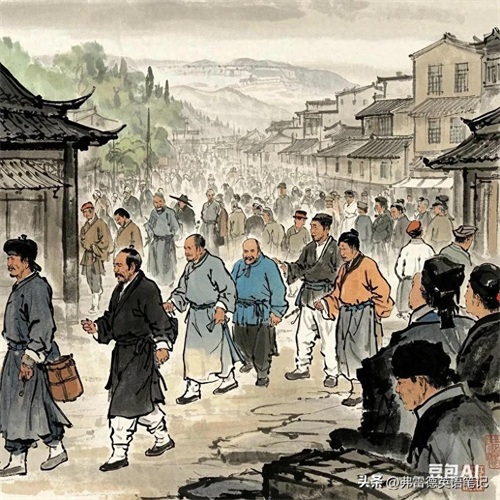
In ancient Chinese mythology, there is a view that Chi You's real name was Li Tan. Chi You was a remarkable leader of the Jiuli tribe in pre - historic times. He was born with extraordinary strength and wisdom, and his appearance was also quite unique, often being described as having a fierce and powerful look.
在中国古代神话中,有一种观点认为蚩尤的真名是黎贪。蚩尤是史前时期九黎部落一位卓越的首领。他天生神力且极具智慧,外貌也颇为独特,常被形容为面容威猛、气势强大。
Chi You was a pioneer in the development of weapon - making technology. Under his leadership, the Jiuli tribe mastered advanced techniques in smelting metal to create sharp and durable weapons. This technological edge greatly enhanced the combat capabilities of the Jiuli tribe, making them a powerful force in that era.
蚩尤是武器制造技术发展的先驱。在他的领导下,九黎部落掌握了先进的金属冶炼技术,制造出锋利耐用的武器。这一技术优势极大地提升了九黎部落的战斗力,使其成为那个时代的一股强大力量。
His ambition was not limited to leading his own tribe. He aimed to expand the territory and influence of the Jiuli tribe, which led to inevitable conflicts with other tribes. Among these, the most famous one was the Battle of Zhuolu against the Yellow Emperor. In this epic - scale battle, Chi You and his tribe fought bravely with their advanced weapons. The battle was extremely fierce, with both sides showing great tenacity. However, in the end, the Yellow Emperor, with his outstanding strategic wisdom and the support of various forces, emerged victorious.
他的志向并不局限于领导自己的部落,还旨在扩大九黎部落的领土和影响力,这就导致了与其他部落不可避免的冲突。其中,最著名的便是与黄帝的涿鹿之战。在这场史诗级的大战中,蚩尤和他的部落凭借先进武器奋勇作战。战斗异常激烈,双方都展现出了极强的韧性。然而,最终黄帝凭借卓越的战略智慧和各方力量的支持取得了胜利。
Despite his defeat, Chi You's image and deeds have left a deep mark in Chinese mythology and history. He is remembered as a fearless and powerful leader, representing the indomitable spirit of a tribe in the ancient struggle for survival and development.
尽管战败,但蚩尤的形象和事迹在中国神话和历史中留下了深刻的印记。他被铭记为一位无畏且强大的领袖,代表着远古时期一个部落在生存与发展的斗争中不屈不挠的精神。
After Chi You's defeat in the Battle of Zhuolu, the people of the Jiuli tribe, who were once under his leadership, were called "Li Min". The term "Li" might be related to their ethnic identity or their original living area. These people, as the defeated group, were in a relatively low - status position in the newly - formed social order.
蚩尤在涿鹿之战战败后,曾经受他统领的九黎部落民众被称作“黎民”。“黎”字可能与他们的族属或者原本的生活区域有关。这些人作为战败群体,在新形成的社会秩序中处于相对较低的地位。
On the other hand, the Huaxia tribe, which was led by the Yellow Emperor, consisted of many different clans. Each clan had its own surname, and these clans were collectively referred to as "Bai Xing". "Bai" here means many, and "Xing" represents surnames. In the beginning, "Bai Xing" represented the noble clans within the Huaxia tribe, holding a relatively high - status position in society.
另一方面,黄帝领导的华夏部落由众多不同的氏族构成。每个氏族都有自己的姓氏,这些氏族被统称为“百姓”。这里的“百”表示众多,“姓”代表姓氏。最初,“百姓”代表着华夏部落内的贵族氏族,在社会中拥有相对较高的地位。
As time went by, with the continuous integration of different tribes and the development of society, the boundaries between "Li Min" and "Bai Xing" gradually blurred. People from both groups interacted, intermarried, and jointly participated in the construction and development of the country.
随着时间的推移,不同部落不断融合,社会持续发展,“黎民”和“百姓”之间的界限逐渐模糊。两个群体的人们相互交流、通婚,共同参与国家的建设与发展。
Eventually, the term "Li Min Bai Xing" was used to refer to all the common people in the country, regardless of their original tribal or clan identities. This term became a symbol of the unity and integration of the ancient Chinese nation, representing the joint efforts of all people in building a prosperous and stable country.
最终,“黎民百姓”一词被用来指代全国所有的普通民众,不论他们原本来自哪个部落或氏族。这个词成为了古代中华民族团结与融合的象征,代表着全体人民共同为建设繁荣稳定国家所付出的努力。
-
- 人到中年,如果异性对你有这两种行为,就不要联系了
-
2025-09-01 17:35:46
-
- 16号线“大站车”运营首日全记录出行攻略三大提示教你如何乘坐“大站车”
-
2025-09-01 17:33:29
-
- 《雪中悍刀行》赵黄巢、刘松涛成就了轩辕青锋?这一世独爱徐凤年
-
2025-09-01 17:31:13
-
- 长江黑鱼入侵:美国多地水域 专家建议:捕获后立刻杀死
-
2025-09-01 17:28:57
-
- 亚伯拉罕·林肯——历史上著名的白宫鬼魂之传说
-
2025-09-01 17:26:40
-
- “七尺之躯已许国,再难许卿”的松坡将军,爱小凤仙是一大谎言?
-
2025-08-31 19:44:39
-
- 徐华凤:做7年小三挤走原配,踏进豪门3年,浑身长瘤死在丈夫怀中
-
2025-08-31 19:42:23
-
- 全国政协副秘书长高波,有新职(附简历)
-
2025-08-31 19:40:07
-
- “玻璃之上人在走,玻璃之下魂在飞”,一览各地高空玻璃栈道
-
2025-08-31 19:37:51
-
- 一女子与丈夫发生矛盾,出现口角,被公公罚跪在门口,双手背在后面,罚跪前,
-
2025-08-31 19:35:35
-
- 乌克兰为何不愿回到俄罗斯呢?反而摆脱俄罗斯影响的迹象很明显
-
2025-08-31 19:33:19
-
- 去北京的必去景点出来了
-
2025-08-31 19:31:03
-

- 晚清老照片,船妓在整理床铺,裹小脚女子坐男子腿上拍照
-
2025-08-31 19:28:48
-
- 甘肃敦煌瓜州锁阳城,详细游玩攻略推荐,景区介绍指南
-
2025-08-31 19:26:32
-
- 改革进行时 | @长宁团团,团员教育评议制度来啦!
-
2025-08-31 19:24:16
-
- 《进击的智人》:进化,与匮乏并肩而行
-
2025-08-30 18:35:11
-
- #同性恋能改变吗#同性恋在西方国家可以说是很正常,随着东西
-
2025-08-30 18:32:55
-
- 中华瑰宝——鳜鱼
-
2025-08-30 18:30:39
-
- 巍子个人资料 巍子主演过什么电视剧
-
2025-08-30 18:28:23
-
- 王者联盟流量消耗大吗 王者联盟一局要多少流量
-
2025-08-30 18:26:08
 越南“第一美女”肤白貌美,性感气质佳
 中国最脏的女明星排名(十大最不干净女明星)